

 view lightbox




Size Inclusivity: Why Is Fashion Going Backwards?
written by
Tessa Dewing

SIZE INCLUSIVITY: WHY IS FASHION GOING BACKWARDS?
By Tessa Dewing, Managing Director of Sandra Reynolds and host of The Business of Modelling podcast
With London Fashion Week approaching, followed by New York, Milan and Paris, I’ve been thinking a lot about size inclusivity, and whether fashion is quietly moving backwards again. These main shows don’t just present clothes - they shape casting decisions, buying, editorials, and ultimately what ends up in shops worldwide. And as the industry prepares for another season of shows and commentary, I find the direction we’re heading in genuinely disappointing.
Every few seasons, fashion flirts with the idea of progress. A broader mix of body sizes on the catwalk, more realistic representation in campaigns, and the response is always positive. People talk about how modern it feels, how much more relatable it looks. And then, just as consistently, it retreats again.
When I read the Vogue Business size inclusivity report from October 2025, it confirmed what many of us already suspected. Representation of different body sizes on the runway has declined over several seasons. At a time when the industry is talking endlessly about inclusion, wellbeing and relevance, the reality is that fashion is becoming narrower again, not broader.
The same explanation always surfaces - sample sizes. The clothes are small, the samples are small, and the models have to fit them. But I don’t accept that as a genuine barrier anymore. These are global fashion brands with the resources to produce entire collections, transport them across continents, stage elaborate shows and fund major campaigns. If they wanted to make bigger samples, they would. This isn’t a logistical problem. It’s a choice.
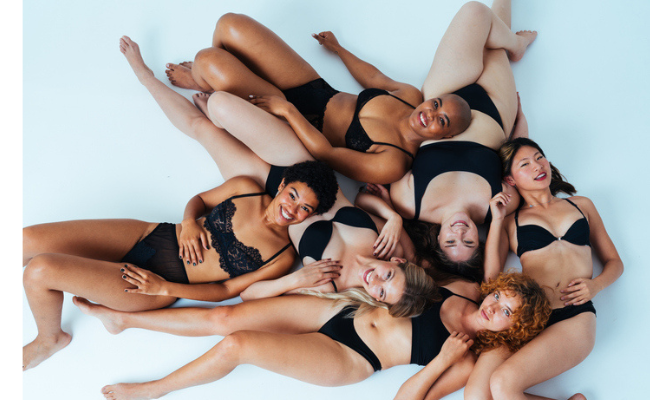
And it’s important to be clear about what we’re actually talking about here. This isn’t about abandoning aspiration or lowering standards. We’re still talking about gorgeous models. Tall, with great proportions, presence, and the ability to showcase clothes beautifully. No one is suggesting that people like me should suddenly be walking down the runway - and let’s be honest, if that happened, the sales probably would dry up very quickly! That’s not what this is.
What I don’t understand is why aspiration still seems to equal super-skinny. Why does fashion keep insisting that there is only one acceptable body type to represent desire, success or beauty? It isn’t real, and it certainly isn’t healthy. And deep down, I think the industry knows that.
From a commercial point of view, the disconnect is staggering. There are huge numbers of women with money to spend who like fashion, appreciate quality and want to buy into brands with a point of view. Yet they’re excluded by default. When those customers don’t see themselves represented, and can’t physically fit into what’s being sold, they end up with very limited options. More often than not, that means being pushed towards low-cost, high-volume fast fashion retailers. That’s bad for brand loyalty, bad for margins, and completely undermines all the sustainability messaging fashion likes to promote.
What’s interesting is that in the commercial world, things often look very different. In advertising and commercial casting, there’s generally more realism. A broader mix of sizes. Bodies that feel closer to the people actually buying the product. That’s encouraging, and it proves this isn’t impossible. But it also highlights how far behind the fashion market still is, despite positioning itself as the industry leader.

What makes this regression more frustrating is that we’ve already seen that inclusive show casting can work well. Designers like Christian Siriano have consistently shown that curvier models can carry drama, glamour and aspiration without compromise, backed up by clothes that are actually made to fit them. Brands such as Versace and Michael Kors have also had moments in recent seasons where mid- and plus-size models were cast confidently on the catwalk, styled no differently to their straight-size counterparts. Outside the traditional fashion week system, Savage x Fenty demonstrated just how powerful inclusive casting can be when it’s treated as normal rather than noteworthy. The problem isn’t that the industry doesn’t know how to do this, it’s that too often it chooses not to.
Through my work at Sandra Reynolds, and through conversations on my podcast The Business of Modelling, I hear these realities first-hand.
On the podcast, Anna Shillinglaw of Milk Management spoke very openly about her own experience in the industry. She talked about being labelled “plus size” at a UK size 10–12, and how absurd that categorisation felt even at the time. As she put it, being told you’re “too big” when you’re a perfectly normal size creates a constant sense that your body is somehow wrong. She also described being pushed to gain weight for certain markets, then losing work when she did, and even being advised to pad her body to meet expectations. It was a stark reminder that these labels aren’t just theoretical - they shape careers and self-worth in very real ways.
Anna also made a point that really stuck with me: the industry’s obsession with categories leaves a huge number of women in limbo. Too big for straight size, not big enough for plus size, and quietly sidelined as a result. That space still exists, and it’s damaging.
I also discussed this with Sophie Hughes on the podcast, from a model’s perspective. Sophie spoke about how body changes over time affect the way you’re perceived and booked, and how you can feel yourself slipping in and out of favour without anything about your professionalism or ability changing. She talked about the mental load of constantly being aware of where you sit in the industry’s unspoken hierarchy of bodies, even as brands claim to be more inclusive.
What both conversations made clear is that size inclusivity isn’t just a casting issue. It’s cultural. It’s about language, expectations, and the quiet signals the industry sends about what is acceptable and what isn’t.
And then there’s the personal side of this, which I don’t think we talk about enough.
I want my daughters to grow up seeing people of different sizes representing the brands they admire. I don’t want them absorbing the idea that success or beauty only comes in one very specific shape. I don’t want them feeling a bit rubbish about themselves because they’re not 5’10” and a size 6–8. Those messages land early, and they stay with you. Fashion might tell itself that it’s only speaking to a niche audience, but the imagery filters far wider than that.
With London Fashion Week coming up next month, followed closely by New York, Milan and Paris, this feels like a moment of truth again. These shows set the tone - they influence casting, buying, editorial and ultimately what ends up in shops.
I’m genuinely interested to see what the main four fashion weeks have in store this season. Whether brands are willing to stop hiding behind sample sizes, and whether they’re prepared to reflect the people who actually buy the clothes.
share post




written by Tessa Dewing

get in touch with the booking desk
020 7387 5858 send an email subscribe to our newsletter live chat using the icon below