


 view lightbox



AI Image Use, Consent and Digital Twins: What Model Agencies Are Navigating
written by
Tessa Dewing

AI IMAGE USE, CONSENT AND DIGITAL TWINS: What Model Agencies Are Navigating
By Tessa Dewing, Managing Director of Sandra Reynolds and host of The Business of Modelling podcast
AI is no longer a future-facing discussion for model agencies. It is already shaping how work is commissioned, contracts are written, and increasingly, whether certain jobs exist at all.
From where I sit running an agency, this is not a philosophical debate about technology any longer, it's now operational. It affects how long bookings take to negotiate, how much scrutiny contracts require, and how confidently we can advise models about the long-term implications of the work they are agreeing to.
At the moment, AI still takes significant time and resource - in many cases, as much as a traditional shoot, sometimes more. But the technology is improving quickly, and once it becomes faster and cheaper at scale, its impact on shoots that require human models could be significant.
That is why conversations about consent, usage and image control need to happen now.
WHY AI FUNDAMENTALLY CHANGES IMAGE RIGHTS
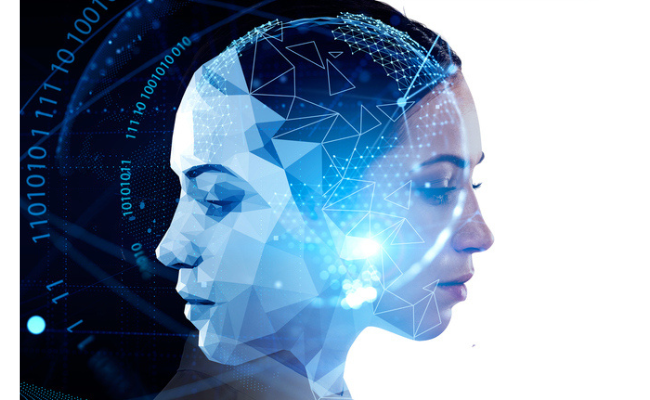
For working models, the issue is not whether AI should exist. It is what happens to your likeness once it becomes part of a digital system. Most of us have spent years clicking “agree” at the bottom of websites without reading what we were consenting to, and in doing so have effectively allowed our data, images and behaviour to be absorbed into systems now being used to train AI.
Large AI models have been trained on vast amounts of existing material. That includes publicly available images, editorial content, e-commerce imagery, social media posts, websites, forums, captions, metadata and scraped online archives. In many cases, this material was never created with AI training in mind, and consent was either unclear, assumed, or bundled into terms few people realistically read.
That context matters, because what once felt abstract or harmless now has real consequences with technology that has become commercially viable.
AI allows for the creation of highly realistic digital representations of people, often referred to as digital twins or digital doubles. These can be built using existing campaign imagery or previous shoots. If permissions are loosely defined, that likeness can be reused, altered, trained on or repurposed far beyond the original job.
In my conversation with Cameron-James Wilson from The Diigitals, on my podcast The Business of Modelling, he was very clear about where the risk lies. As he put it, “Once your likeness exists digitally, control is the hardest thing to get back.” His point was not that AI is inherently problematic, but that consent has to be precise. “If you don’t define what’s allowed upfront,” he explained, “you’re effectively handing future decisions to someone else.”
What agencies are now grappling with is no longer a one-off usage discussion, but long-term control of a person’s image.
WHERE AI MODELS ARE ALREADY BEING USED PUBLICLY
This is no longer happening quietly or at the margins of the industry, AI-generated models have already appeared in major fashion media, including Vogue, which brought the conversation firmly into the mainstream. Whether welcomed or criticised, it demonstrated that AI imagery is now being legitimised at the highest levels.
H&M made headlines with its use of digital twins. The brand positioned this as a way to improve efficiency and scale content, but the reaction across the industry was telling. The focus quickly moved to consent, control and what this means for future work, particularly when a digital replica can be reused without a new booking.
For agencies, these examples matter because they signal direction. When major brands and publications adopt AI openly, it normalises its use and accelerates adoption elsewhere, particularly in high-volume areas such as e-commerce. The question is no longer whether AI will be used, but under what terms.
WHAT AGENCIES ARE DEALING WITH IN CONTRACTS
From an agency perspective, AI has added a substantial and ongoing workload.
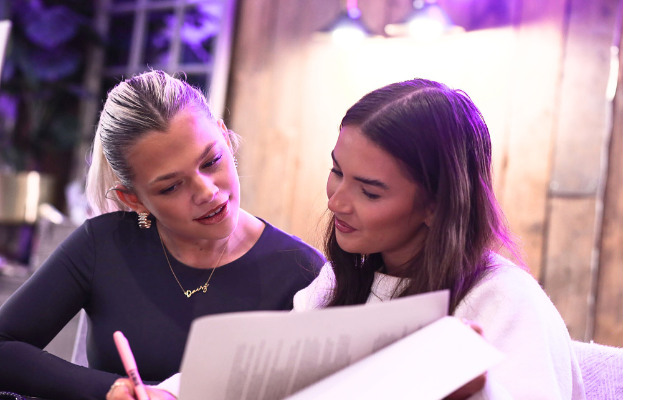
AI clauses are now routinely included in contracts. They are often lengthy, highly technical and written to anticipate future developments rather than reflect current use and can sit alongside standard usage clauses in ways that are not always immediately obvious. This has become one of the most time-consuming parts of the booking process.
As our Head Booker, Emma Keal, explained: “These contracts are often several pages long, in very small print, and sometimes not in English as we work with companies throughout the world. AI clauses are written differently every time, so identifying them and checking what they actually allow has become a significant part of the booking process. Ultimately, there needs to be clearer regulation and standardisation.”
Clauses can include permissions to create digital replicas, to train AI systems using a model’s likeness, to reuse content indefinitely, or to sublicense it to third parties. Once those rights are signed away, reversing them is extremely difficult, if not impossible.
When I spoke to Ingo Nolden, CEO of Iconic Management in Berlin, he summed it up bluntly. He described AI as “the biggest chance, but also the biggest threat the modelling industry has ever faced.” His point was that protecting name, image and likeness is no longer a niche legal concern. It has become central to what agencies do every day.
THE BFMA & COLLECTIVE AGENCY ACTION
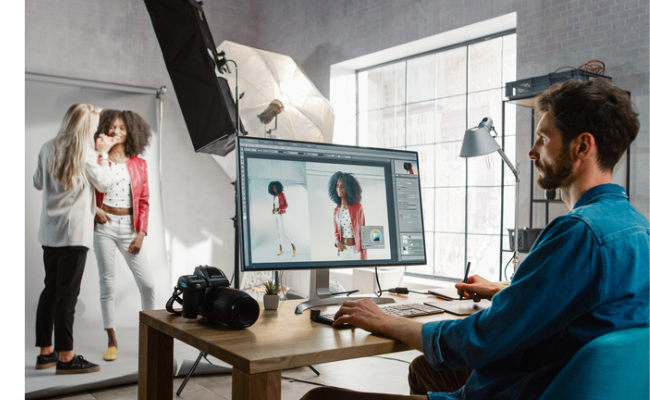
In the UK, this is not something agencies are tackling in isolation. The British Fashion Model Agents Association has been actively engaging with AI, consent , and image rights, working with a group of UK agencies to assess how contracts are changing and where protections need strengthening.
That collective approach matters. AI clauses are becoming increasingly standardised and complex, often drafted at a scale individual agencies cannot easily influence. Shared understanding and industry-level guidance help ensure models are protected consistently.
HOW E-COMMERCE IS ALREADY BEING AFFECTED
One area where AI’s impact is no longer theoretical is e-commerce.
For many models, e-commerce work is the backbone of their income. It is high-volume, repeatable and commercially reliable.
In my conversation with Cameron, we discussed a company we have worked with for many years. Historically, they would shoot real models and then use AI to assist with garment placement, colourways or efficiency improvements. It was a hybrid process that still relied on live shoots.
As Cameron explained, “That middle stage has now disappeared.” The technology has moved to a point where those companies no longer need to shoot models at all. “They’ve gone from using AI to support shoots to using AI to replace them.”
That change is already reducing the number of e-commerce bookings directly affecting one of the most important income streams for working models.
REGULATION IS EMERGING, BUT UNEVEN
In June 2025, New York introduced legislation recognising that a model owns their AI likeness, separating a human being from a digital asset and making it clear that a likeness cannot automatically be granted away within a standard modelling contract.
That is a meaningful step, but it is local. Most agencies and models operate internationally, and UK and European frameworks are still developing. Until regulation catches up, much of the responsibility remains with agencies and models to push for clarity.
In his recent report on AI’s impact on the modelling industry, Ingo Nolden, CEO of Iconic Management in Berlin, was very clear about the risks agencies and models are now facing. I spoke to Ingo about this on The Business of Modelling podcast, and his written work builds on those conversations in a more formal way. He warns that “without clear guidelines, the line between human and machine will blur faster than anticipated,” and that AI’s rapid evolution is already challenging traditional modelling careers and intellectual property rights.
Ingo’s position is clear. Innovation is moving faster than regulation, and without enforceable safeguards, models risk losing control over their likeness not through bad faith, but through the absence of clear rules. As he puts it, “the industry stands at a crossroads,” and unless agencies, brands and regulators act together, protection will remain inconsistent and reactive.
This reinforces what many agencies are already experiencing in practice. Until regulation is aligned across markets, agencies are effectively acting as the first line of defence, negotiating protection contract by contract in an environment that lacks standardisation.
WHY TIMING MATTERS
One of the biggest risks right now is treating AI as something to deal with after content has been created. AI usage needs to be discussed before a booking is agreed. Models should know whether AI is involved at all, how it will be used, whether their likeness is being altered or trained on, whether there are time limits, and whether additional payment applies.
These are no longer specialist or awkward questions. They have to be part of our professional due diligence.
WHERE THIS LEAVES US
AI will become part of how this industry operates. Some uses will be reasonable and fair. Others will not.
From an agency point of view, the real risk is not one dramatic moment where control is lost, but a gradual erosion through vague permissions, combined with a steady reduction in certain types of work, particularly e-commerce.
Protecting models in practice now requires clear consent, better contracts and collective industry action. And conversations happening before work is agreed, not once the consequences are already in motion.
share post



written by Tessa Dewing

get in touch with the booking desk
020 7387 5858 send an email subscribe to our newsletter live chat using the icon below